Icebergs are floating chunks of freshwater ice broken off from glaciers or ice shelves in a process called “calving.” They drift on ocean currents and are mainly found in the North Atlantic Ocean and the seas around Antarctica.
Smaller icebergs are referred to as “growlers” or “bergy bits.” The average lifespan of icebergs (from calving to melting) in the North Atlantic Ocean ranges from two to three years.
Tabular icebergs are mammoth with steep sides and flat tops. A23A, the largest and oldest tabular iceberg, broke off from Antarctica’s Filchner Ice Shelf in 1988. Three times the size of New York City, it is currently floating out of the Weddell Sea into the Southern Ocean.
90% of an iceberg’s mass lies below the surface. An iceberg was responsible for sinking the RMS Titanic on April 15, 1912 off the southeastern coast of Newfoundland, Canada in the North Atlantic Ocean. Thanks to technological advancements, the risk once posed to ships has been largely eliminated.
The photographs in this blog were taken in late February on an excursion to Antarctica.

Icebergs are incredibly beautiful. This one resembles a hat, sail or floating mountain.
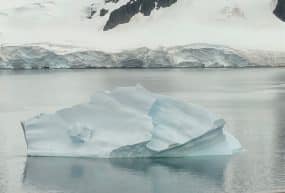
Smaller icebergs are referred to as “growlers” or “bergy bits.”
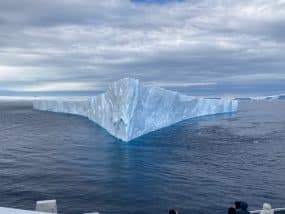
Passengers on a cruise ship watching a Tabular iceberg in a stretch of water separating the tip of the Antarctic Peninsula from the Joinville Islands.