Antarctica is the most southern of the world’s seven continents. It is governed by a group of nations in an international treaty called The Antarctica Treaty that was signed in 1959. The nations are: Argentina, Chile, Australia, New Zealand, France, Norway, and the United Kingdom. Esperanza is one of 60 scientific research stations in Antarctica.
Esperanza is a permanent year-round Argentine settlement and research station located in Hope Bay on Trinity Peninsula, Antarctica. Established in 1952, it is situated on Antarctica Sound, a stretch of water separating the tip of Antarctica and Joinville Islands.
Approximately 80 people live in Esperanza. The 40 or so buildings include: a chapel, post office, medical centre, gym, school, communal hall, and bank. Laboratories on site study glaciology, biology, and oceanography.
The Antarctic cruise season runs during their November to March summer period. Ships bring around 1,000 tourists annually to Esperanza. There is a small museum and residents provide tours.
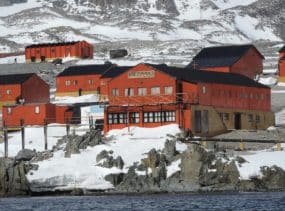
The buildings are painted red to remain visible in a blizzard.
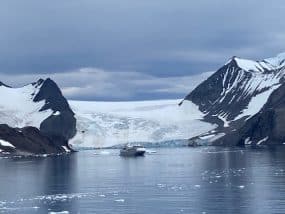
Cruise ship anchored in Hope Bay.
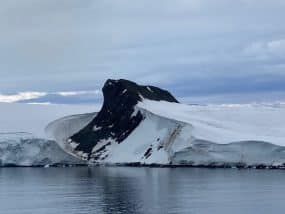
Hope Bay with mountains in background. Small icebergs in water.
What a setting for a story!
Antarctica’s first human resident was born in Esperanza in 1978. What is day-to-day living like for families with children? Satellite connection provides communication and entertainment; nevertheless, how do residents cope with the isolation? What are the challenges of being a teenager, teacher or chef? The writer in me imagines countless story lines rooted in this unique setting. Perhaps, I will pen a future book in Antarctica.